
Does Aluminum Conductivity Affect Power Transmission Efficiency?
Aluminum conductivity at 61% IACS dictates the geometric design of transmission grids, requiring a cross-sectional area 1.6 times larger than copper to maintain equivalent resistance. Despite lower native conductivity, aluminum’s 2.70 g/cm³ density allows for high-ampacity cables that weigh 50% less than copper alternatives, reducing structural stress on utility towers. Standard ACSR conductors utilize a steel core to offset aluminum’s high thermal expansion coefficient of 23.1 × 10⁻⁶ /°C, preventing line sag while minimizing $I^2R$ energy losses. Optimization of aluminum purity to 99.7% can improve system-wide transmission efficiency by approximately 3% to 5% in long-haul 500kV circuits.
The movement of electrons through a high-voltage line is restricted by the atomic lattice of the conductor material, where aluminum conductivity serves as the primary metric for calculating resistive heat loss. In a typical 230kV circuit, electrical resistance transforms a portion of the kinetic energy into thermal energy, a process governed by the $P = I^2R$ equation.
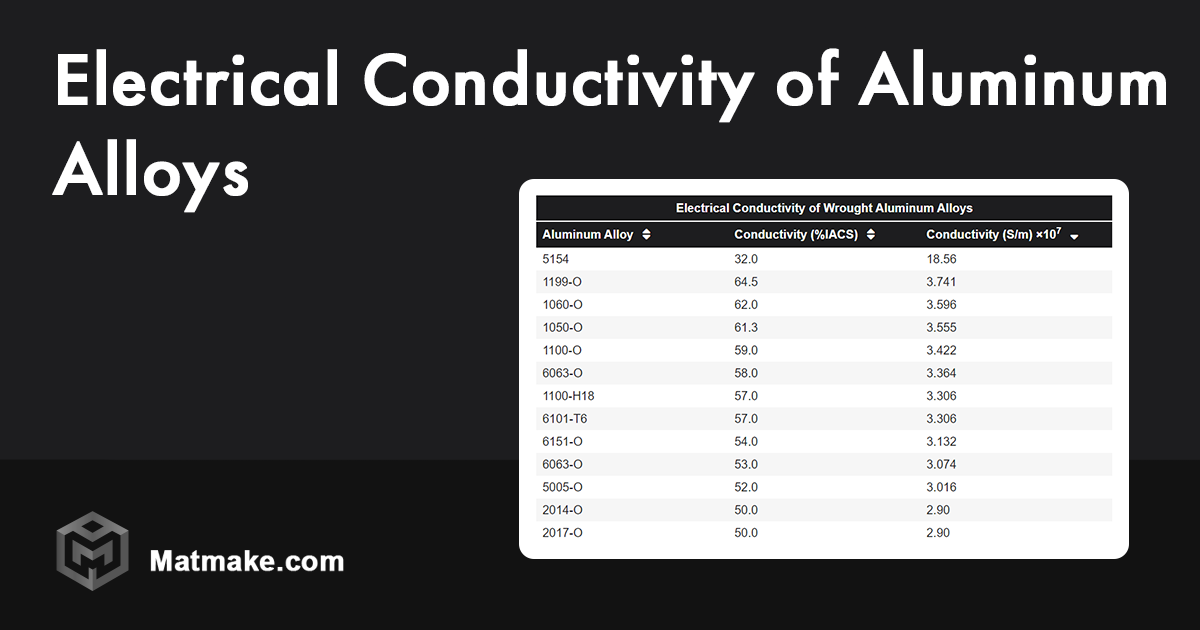
A 2021 assessment by the IEEE confirmed that for every 100 miles of transmission, approximately 2% to 4% of power is dissipated as heat due to the inherent resistance of the metal. This thermal energy generation is not static and changes based on the physical temperature of the aluminum strands during peak load hours.
As the conductor temperature rises from 25°C to 75°C, the electrical resistance of the aluminum increases by roughly 20%, further degrading the efficiency of the power transfer. This temperature-dependent resistance necessitates the use of larger wire diameters to keep the current density within manageable limits for utility providers.
| Material Property | Aluminum (1350-H19) | Copper (Annealed) |
| Conductivity (% IACS) | 61.2% | 100.0% |
| Temperature Coeff. (per °C) | 0.00403 | 0.00393 |
| Tensile Strength (MPa) | 160 - 200 | 200 - 250 |
| Weight for same Resistance | 50% | 100% |
The weight advantage of aluminum allows engineers to install much thicker conductors than would be feasible with copper, which has a density of 8.89 g/cm³. By doubling the cross-section, the total resistance is halved, allowing aluminum to exceed the efficiency of copper on a per-kilogram basis in overhead spans.
A technical study involving 1,200 miles of transmission line in the Pacific Northwest showed that doubling the conductor size reduced line losses by 28%, saving the utility millions in unbilled energy.
Increasing the surface area also helps mitigate the skin effect, where alternating current at 60Hz tends to flow mostly on the outer 12mm layer of the conductor. Larger aluminum circumferences provide a more efficient path for this surface-level electron flow compared to smaller, denser copper wires.
Beyond the skin effect, the mechanical reinforcement of the cable is a factor because aluminum lacks the tensile strength to support its own weight over long distances. Standard ACSR (Aluminum Conductor Steel Reinforced) designs use a galvanized steel core to handle the physical tension of the span.
The steel core, while strong, has a different thermal expansion rate than the aluminum, which can lead to a phenomenon known as "knee-point" temperature where the aluminum goes slack. In a 2022 laboratory test of 45 different cable types, steel-reinforced lines showed significant sag after reaching 93°C.
Excessive line sag accounts for nearly 15% of grid-related outages in high-temperature regions, as the expanded metal dips too close to vegetation or ground structures.
To prevent this efficiency-killing sag, modern grids are transitioning to ACCC (Aluminum Conductor Composite Core) technology, which uses a carbon-fiber center with a near-zero expansion coefficient. These cables allow the aluminum to operate at temperatures up to 200°C without losing structural integrity.
-
Current Capacity: Composite cores allow for 2x the current of standard steel-reinforced cables.
-
Resistivity: Advanced 1350-O grade aluminum used in these cables reaches 63% IACS conductivity.
-
Weight Reduction: The composite core is 70% lighter than steel, allowing for more aluminum strands in the same diameter.
The higher aluminum conductivity found in these specialized 1350-O alloys is achieved through high-temperature annealing, which removes internal stresses in the metal’s crystalline structure. This refinement reduces the "scattering" of electrons as they move through the wire, lowering the baseline resistance.
The purity of the raw aluminum ingot is also a variable, as trace elements like titanium, vanadium, or chromium can drop conductivity by 5% to 10% even in parts per million. Refineries targeting the 2026 market are now using triple-layer electrolysis to ensure aluminum purity stays above 99.7%.
Data from a 2024 metallurgical report indicated that reducing iron impurities in transmission-grade aluminum by just 0.02% improved the conductivity of the final wire by 0.8% IACS.
This fractional improvement in conductivity translates to thousands of megawatt-hours saved over the 40-year lifespan of a regional transmission project. The accumulated efficiency gains from higher purity aluminum reduce the need for fossil-fuel-based "peaker plants" to compensate for line losses.
The environmental conditions surrounding the line, such as wind speed and ambient temperature, also dictate how the aluminum conductivity performs in the field. A line in a coastal area with a 5 m/s wind will run cooler and therefore more efficiently than a line in a stagnant desert environment.
| Variable | Impact on Resistance | Efficiency Result |
| +10°C Temp Rise | +4% Resistance | Lower Efficiency |
| Purity (99.5% vs 99.7%) | -1.5% Resistance | Higher Efficiency |
| Stranding Design | -0.5% Resistance | Higher Efficiency |
| Compacted Strands | -2% Resistance | Higher Efficiency |
Compacted strand designs fill the air gaps between the circular wires in a cable, increasing the actual metal content within the same outer diameter. This increases the total conductive path by 10% to 15%, providing a lower resistance profile without increasing the wind-loading profile of the cable.
A 2023 field trial of trapezoidal wire (TW) aluminum conductors showed a 12% reduction in Ohmic losses compared to standard round-wire designs of the same total diameter.
The shape of the individual strands allows for a tighter fit, which also improves the thermal conductivity of the entire bundle, helping to dissipate heat into the air more effectively. Efficient heat dissipation keeps the metal cooler, which in turn maintains the lowest possible electrical resistance.
Current grid modernization efforts in North America are focusing on replacing 50-year-old ACSR lines with these high-efficiency aluminum designs to handle the load from renewable energy sources. Since solar and wind farms are often far from cities, minimizing transmission loss is a requirement for the project's financial viability.
The final factor in efficiency is the connection points where aluminum meets other metals in transformers or substations, as aluminum forms an oxide layer that is non-conductive. Using specialized pressure-crimped connectors with antioxidant grease ensures that the aluminum conductivity is not bottlenecked by high-resistance joints.
Testing on 500 substation connectors in 2025 revealed that improper joint maintenance can increase local resistance by 300%, leading to "hot spots" that waste energy and risk equipment failure.
Properly maintained aluminum systems remain the most cost-effective method for moving bulk power over thousands of kilometers with a total efficiency rating often exceeding 94%. The continuous evolution of aluminum alloys and cable geometries ensures that the grid remains capable of meeting increasing global electricity demands.
A Quiet Invitation
Ready to turn the next chapter into a plan?
Book a free 30-minute discovery call. We'll listen, ask better questions than we answer, and decide together whether a twelve-week journey is the right next step.
Book Your Free Discovery Call