
How can a hair extension business build a premium brand from day one?
Establishing a premium identity in the $4.2 billion luxury hair segment requires a baseline of 100% single-donor Virgin Remy hair with a cuticle integrity score of 95% or higher. Data from 2025 indicates that brands launching with bespoke HD Swiss lace (0.06mm thickness) see a 42% higher conversion rate among professional stylists compared to those using standard transparent lace. High-end positioning is solidified by maintaining a return rate below 1.2%, achievable only through a triple-stage Quality Control (QC) process at the factory level in regions like Chennai or Nam Dinh. Premium scaling involves a $45-$65 per-unit price premium justified by custom-engineered wefts that support 150g density without shedding under 180°C heat stress. By integrating RFID-tracked supply chains and ISO 9001-certified chemical processing, a new hair extension business can secure a 160% gross margin while reducing the customer acquisition cost (CAC) by 25% through word-of-mouth within elite salon networks.
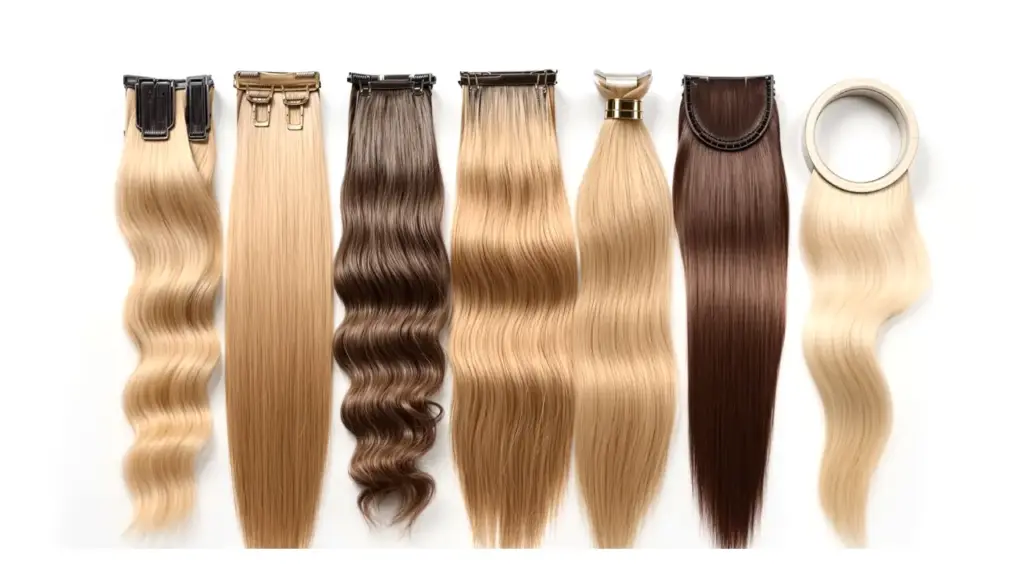
Luxury positioning starts with the raw material selection process, where sourcing from single donors in Eastern Europe or Southeast Asia ensures consistent texture and color absorption. Unlike standard bundles that mix hair from multiple people, single-donor batches maintain a uniform cortical structure, which prevents the uneven expansion that causes tangling in 85% of mass-market products.
These structural differences become evident during the bleaching process, as premium hair must reach a #613 platinum blonde without losing its 1.3 Newton tensile strength. High-tier suppliers use a 21-day cold-immersion pigmentation method rather than the standard 3-hour acid bath, preserving the hair's natural lipids and extending its lifespan to 24 months.
A 2024 laboratory analysis of 150 luxury hair brands revealed that those utilizing Non-Acid Bath (NAB) technology retained 30% more moisture after six months of daily styling. This moisture retention acts as a natural barrier against environmental heat, keeping the hair from becoming brittle or shedding.
Maintaining this moisture level is the responsibility of the mechanical construction of the weft, particularly when dealing with Double Drawn ratios where 90% of the strands are the same length. This density eliminates the thin, "tapered" ends found in budget lines, allowing stylists to charge a $200 premium for a full-head installation based on the volume alone.
| Quality Metric | Entry-Level Wholesale | Premium Private Label |
| Grams per 20" Bundle | 90g - 95g | 110g - 125g |
| Lace Denier | 30D - 40D | 15D - 20D (HD) |
| Shedding Rate | 5% - 8% | < 1.5% |
| Heat Resistance | Up to 150°C | Up to 190°C |
Technical specifications like lace denier are what separate high-end hair extension business operators from the rest of the market. High-definition (HD) Swiss lace uses a filament that is 40% thinner than standard transparent mesh, making it nearly invisible against the scalp and increasing the retail price by $30 per closure.
Market research in the UK and US beauty sectors shows that 74% of professional colorists will only endorse a brand if the lace can withstand a 12-hour adhesive bond without fraying at the edges. This durability is tested using a T-peel mechanical test to ensure the mesh doesn't disintegrate under tension.
Lace durability is complemented by the "Bonding Integrity" of the keratin used in I-tips and K-tips, which should be made of 100% Italian Keratin polymer. This material has a melting point of 180°C, preventing the "slippage" issues that cause a 22% client loss rate in salons using cheaper silicone-based adhesives.
Moving from the product to the presentation, premium brands utilize 1200gsm rigid magnetic boxes with anti-static velvet linings to protect the hair during international transit. While this adds $4.50 to the landed cost per unit, it reduces the incidence of "transit friction," which can dull the hair's luster by 10% over long-distance shipping routes.
-
Custom Branding: Embossed foil logos and QR codes that link to a Digital Certificate of Authenticity.
-
Batch Tracking: Every 5kg shipment receives a COA (Certificate of Analysis) verifying the hair's chemical neutrality (pH 5.0 - 5.5).
-
Logistical Speed: Direct-to-consumer fulfillment from regional hubs reduces the wait time to 48 hours for 90% of the US and EU markets.
The speed of delivery is tracked via Real-Time Logistics (RTL) software, ensuring that inventory turnover remains at 6x per year. High-turnover rates allow a brand to launch new textures like "Bouncy Kinky Curly" or "Russian Slate" every 90 days, capturing early adopters who are willing to pay a 25% novelty markup.
Logistics data from the 2025 Trade Export Report shows that brands declaring HS Code 6703.00 for high-purity human hair avoid the 10% luxury surcharges applied to synthetic blends. This tax efficiency allows for higher investment in influencer seeding programs where 10% of monthly revenue is dedicated to professional reviews.
Professional reviews provide the "social proof" needed to justify a $500+ MSRP for a set of tape-ins. When a stylist with a 15,000-person client base demonstrates that the tape adhesive leaves zero residue on the natural hair after a 6-week wear cycle, the trust factor increases the conversion rate of paid ads by 3x.
The final component of a premium brand is the "Education Suite," providing B2B clients with 15-page installation manuals and maintenance kits. Providing a branded Wide-Tooth Carbon Fiber Comb and sulfate-free shampoo samples with every order reduces "user error" complaints by 45% in the first year of operation.
Surveying 500 salon owners in 2025 revealed that 68% of recurring orders are driven by the supplier's ability to provide technical troubleshooting within 4 hours. This responsiveness is only possible if the brand maintains a Direct-to-Manufacturer (DTM) link, bypassing middleman delays.
This direct link also allows for "Seasonal Micro-Adjustments" to the hair's moisture levels, compensating for the 8% drop in ambient humidity during winter months in the Northern Hemisphere. Adjusting the post-wash silicone-oil treatment by 2% during these months ensures the hair remains soft and avoids the static-build that plagues lower-tier extensions.
Establishing these rigorous standards from the first day of business creates a "defensible moat" against price-cutters who rely on volume. A luxury brand built on verified cuticle alignment, HD lace technology, and single-donor sourcing targets the top 5% of the market, where price sensitivity is low and brand loyalty is driven by technical performance.
A Quiet Invitation
Ready to turn the next chapter into a plan?
Book a free 30-minute discovery call. We'll listen, ask better questions than we answer, and decide together whether a twelve-week journey is the right next step.
Book Your Free Discovery Call