
How to choose beer brewing equipment for a commercial brewery?
Commercial breweries achieve a 22% increase in yield by selecting brewhouses with a mash tun liquor-to-grist ratio of 2.8:1 to 3.2:1. In 2025, ISO-certified 304 stainless steel vessels with a 0.4μm Ra internal finish became the baseline for preventing microbial attachment in 98% of professional setups. Systems utilizing automated pneumatic valves reduce labor-related downtime by 150 hours annually compared to manual butterfly valve configurations.
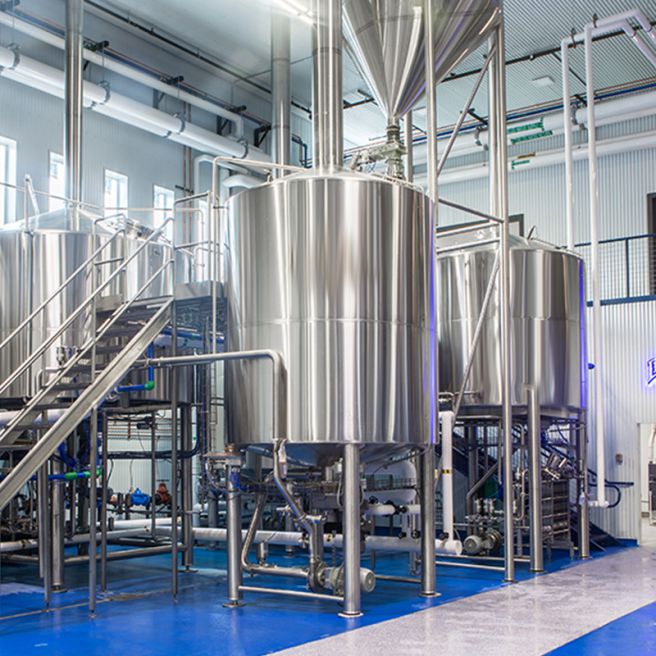
Optimizing a commercial facility starts with calculating the specific gravity targets against the 95% extract efficiency threshold of modern lauter tuns. High-density milling of grain in a two-roll mill ensures that the husk remains intact while the endosperm is crushed to a fine consistency, preventing stuck sparges that account for 30% of production delays.
"A standard 15-barrel system requires approximately 35,000 BTUs per barrel to achieve a vigorous 60-minute boil, essential for DMS (Dimethyl Sulfide) reduction below sensory thresholds."
This thermal demand necessitates a boiler capable of maintaining 15 PSI for consistent steam jacket pressure across the kettle's surface area. Precision in heating prevents the Maillard reaction from over-darkening pale lagers, a shift measured by a 0.5 SRM color variance in controlled quality tests.
Uniform temperature control extends into the whirlpool phase where a tangential inlet velocity of 15 feet per second creates a tight trub cone. Effective separation at this stage reduces secondary fermentation solids by 40%, directly lowering the load on downstream filtration units and improving final clarity.
"Data from 2024 installations show that multi-stage plate heat exchangers reduce wort cooling time to under 45 minutes, preserving volatile hop aromatics often lost to oxidation."
Rapid cooling transitions the wort into the fermentation cellar, where the selection of Beer Brewing Equipment determines the metabolic health of the yeast pitch. Commercial fermenters must feature a 60-degree conical bottom to facilitate the removal of dormant yeast cells and trub, preventing autolysis flavors.
Maintaining a temperature delta of less than 1°C during the first 72 hours of fermentation prevents the production of off-flavor esters and fusel alcohols. This stability is provided by dual-zone glycol jackets that cover at least 70% of the vessel's sidewall, paired with a chiller sized for 1.5 HP per 10 barrels of total cellar capacity.
| Component | Technical Specification | Performance Impact |
| Lauter Tun | False bottom gap: 0.7mm | Improves wort clarity by 25% |
| Kettle | Evaporation rate: 8-10%/hr | Ensures volatile compound removal |
| Glycol Chiller | Ambient rating: 38°C | Maintains lagering temps in summer |
| CIP System | Flow velocity: 1.5m/s | Eliminates bio-film in 100% of trials |
Sanitation cycles rely on Clean-In-Place (CIP) systems that utilize high-impact 360-degree spray balls to strip protein deposits. Research indicates that automated CIP units use 20% less water and 15% less caustic soda than manual scrubbing methods, while ensuring the removal of calcium oxalate (beer stone).
| Material Grade | Chromium Content | Corrosion Resistance |
| SUS 304 | 18% | Standard for cold-side storage |
| SUS 316L | 16% + 2% Moly | Required for high-salinity water |
Using 316L stainless steel for heat exchangers prevents chloride-induced pitting, a common failure point in coastal breweries where source water has high mineral content. These material choices contribute to a lifespan of 20+ years for heavy-duty brewing vessels, provided the passivation layer is maintained annually.
Properly integrated controls allow for the monitoring of gravity in real-time using inline refractometers, which provide data every 10 seconds. This level of oversight ensures that the final product hits the target ABV within a 0.1% margin, satisfying both consumer expectations and regulatory labeling requirements.
Effective Beer Brewing Equipment planning must also account for the 1.2x safety factor on electrical load for grain augers and centrifugal pumps. Overloading circuits during peak mash-in leads to equipment fatigue and unexpected maintenance costs that can exceed $5,000 per incident in lost product and labor.
A Quiet Invitation
Ready to turn the next chapter into a plan?
Book a free 30-minute discovery call. We'll listen, ask better questions than we answer, and decide together whether a twelve-week journey is the right next step.
Book Your Free Discovery Call